
Precision Forgings Product Information
Mass Production of High-precision Forgings Using Proprietary Technology and Equipment Capacity
By taking advantage of forging technologies that it has been cultivating over many
years, as well as its own equipment, NICHIDAI mass-produces precision forgings.
The company provides consistent support for all stages from technical proposal
through to mass production with regard to a variety of its customers’ problems
such as small lots difficult to handle, conversion from conventional machining and
other methods to forging, and specially shaped products that they cannot handle
internally.
NICHIDAI achieves stable supply of high-precision and high-quality precision
forgings by taking advantage of the knowledge that it has accumulated as a forging
die manufacturer to integrate product design, die-making technology, and
production engineering.


Achieving High-quality Precision Forgings Using Development Capabilities Based on Master Craftsmanship and the Company’s Own Equipment
Technical proposal capability unique to die manufacturer
NICHIDAI proposes optimum forging methods by integrating die-making technology
and forging knowhow.
By taking advantage of its strengths as a forging die manufacturer, NICHIDAI
proposes optimum forging methods from the product development stage.
The company supports the realization of high-precision forgings by combining the
die-making technology that determines the quality of forgings and the forging
knowhow accumulated over many years.
- 01 High proposal ability endorsed by forging technology
- 02 High-precision die-making technology that supports the quality of forgings
- 03 Active implementation of new technologies such as one-component lubrication
Production facilities supporting high precision and high efficiency
NICHIDAI flexibly handles high-mix mass production using its comprehensive
equipment and production system.
It owns production facilities including multiple press machines and flexibly
handles high-mix mass production.
NICHIDAI has established a high-precision and high-efficiency production system
through reliable technologies and facilities that expand the possibility of cold
forging.
Press Machines


Technologies and Mechanisms that Support Precision Forging
Production line for scroll parts
NICHIDAI has established production lines dedicated for mass production of
scroll parts to achieve stable quality and productivity.
It enables stable supply of high-precision forgings by optimizing all stages
from process design through to mass production system setup.
-
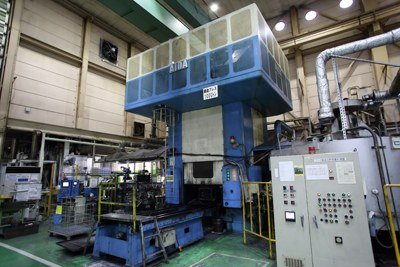
Press -
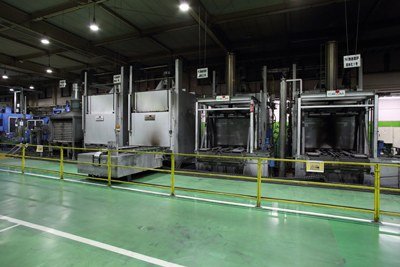
Heat Treatment -
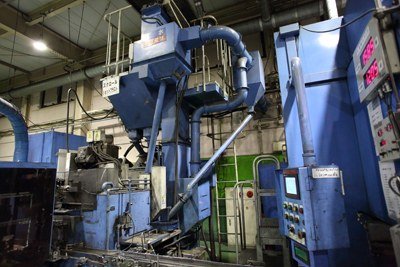
Shot Blasting -
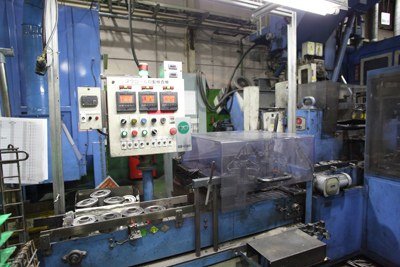
Automated Inspection


Forging-based forming using back-pressure mechanism
Forging-based forming using back-pressure mechanism
Stable forming is achieved by utilizing a back-pressure mechanism in forging-based forming to control the metal flow properly. This leads to formability improvement and defect suppression, making it possible to manufacture high-precision forgings.
Advantages
- Without back pressure, the tip geometry is more prone to variation, often requiring additional machining.
- With back pressure, the tip geometry remains stable, reducing machining costs and improving yield.

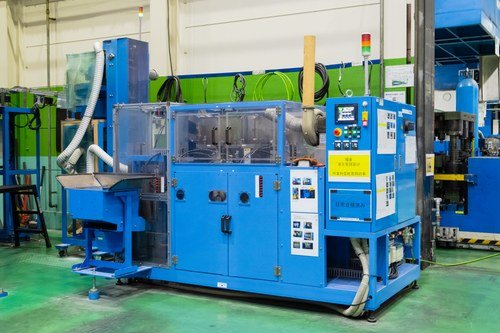
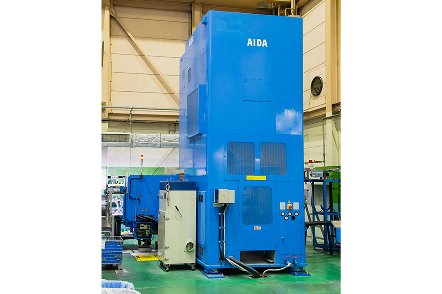
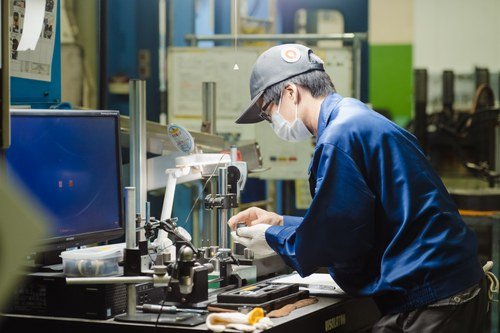
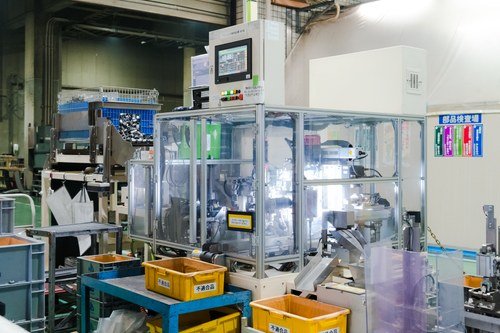
Production line for valve lifters
In valve lifter manufacturing, a forming process suitable for part shapes has
been established to satisfy both high strength and high precision unique to
forging.
Dedicated production lines achieve a mass production system that ensures stable
quality.
-
Lubrication -
Press -
Inspection -
Automated Inspection


Features
-
01 One-component lubrication treatment
One-component lubricant with lubricity, rust resistance, and formability is applied onto metal materials.
The use of one-component lubricant simplifies the treatment process, resulting in cost reduction and productivity improvement.
This also reduces friction during forging and wear on tools and stabilizes the metal flow, making high-precision forming possible. -
02 Cold forging process
Cold forging forms a material into its desired shape by applying high pressure to the material at normal temperature.
Various devices such as die protection and measures against unbalanced load are incorporated in process design to achieve stable processing. -
03 Dimension and shape measurement
After forging, dimensions and shapes of products are measured to check whether they meet the design specifications.
For appearance inspection, automatic inspection equipment has been introduced to automate 100% inspection which was visually conducted previously.
Assembly line
High-quality assembly processes have been established mainly for turbocharger
parts for automobiles.
Products that meet customers’ quality requirements are provided by assembling
precision-machined parts one at a time with high precision.
-
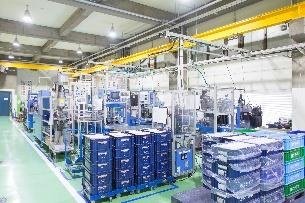
Parts acceptance and quality check -
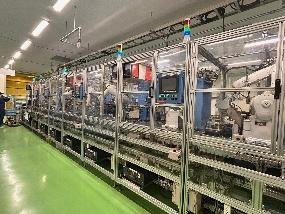
Precision assembly -
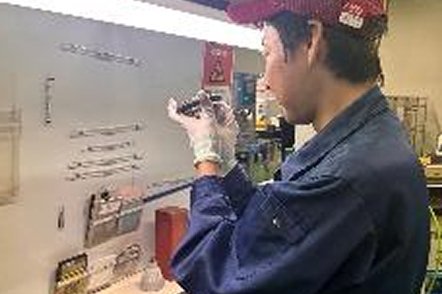
Dimension (appearance) inspection -
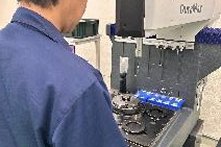
Final inspection


Features
-
01 Improved productivity through automation (labor saving)
Labor saving and stable assembly quality have been achieved using automation equipment and dedicated jigs.
-
02 High-quality assurance
Various inspections are conducted in the assembly process and only products that meet strict quality standards are shipped.
-
03 Assembly technology accumulated over many years
By taking advantage of the knowhow that it has cultivated through mass production of turbocharger parts, NICHIDAI has established a high-precision assembly technology and stable mass production system.
-
04 Supply chain management
NICHIDAI has established a system in which components are procured from suppliers both inside and outside Japan and components manufactured using various methods can be procured globally.
-
05 Global support
NICHIDAI supports customers’ global production systems by coordinating with production bases not only in Japan but also outside Japan.
At its base in Thailand, NICHIDAI conducts in-house manufacturing for heat treatment and surface treatment (carburizing and chromizing) to achieve a consistent production system. -
06 Production Control
We centrally manage production planning, processes, and progress to maintain accurate visibility into production status. This enables stable mass production and reliable on-time delivery.
